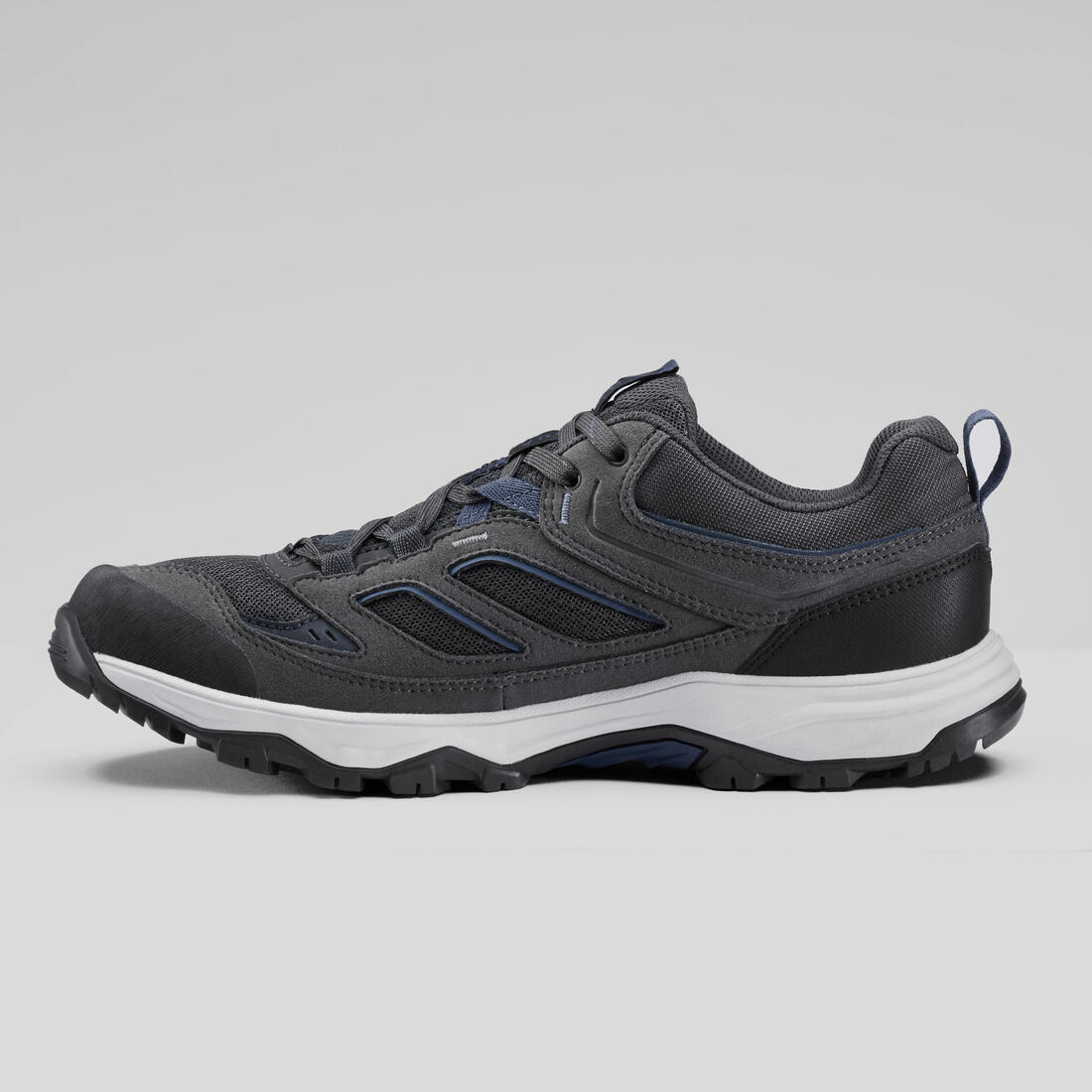
Do you enjoy walking trails at your own pace and taking in the scenery? Hike with confidence on your occasional outings with these non-slip boots
The frequency and intensity of hiking
Our products are ranked according to three levels of experience.
1. Occasional use: Ten hikes per year that last for about 3–4 hours each, covering less than 10 km and less than 700 m in elevation gain.
2. Regular: 20 outings lasting 4-6 hours each, 10 to 20 km, 700 to 1,200 m in elevation gain
3. Intensive: more than 20 outings lasting more than six hours each, more than 20 km, 1,200 to 2,000 m of elevation gain
What size should you choose?
We advise you to try on several sizes and styles of boots to find the pair most suited to you. You can take a size above your usual one to prevent your toes from bumping into the front of the boots when going downhill, provided the foot is properly supported to avoid friction.
how to try on your boots?
1. Try on both boots, while standing up, with the socks you would wear for hiking.
2. Tighten the laces, distributing the tension evenly.
3. Check two aspects:
- that your heel doesn’t lift up before the boot when walking on an incline
- that your foot doesn’t slip; and also that your toes don’t hit the front on the downhill.
What’s the difference between traction and grip?
Traction optimises propulsion, prevents the boots from slipping backwards and stabilises them. It depends on the number and shape of the boots’ crampons.
Grip prevents the boots from slipping and skidding on smooth ground or in demanding conditions.
How to care for your boots
1. Leave your boots to air dry.
2. Remove dry mud with a stiff brush.
3. Clean stains with a brush and some warm water and leave to dry.
4. Use a re-waterproofing spray to restore water-repellency on the upper.
replace your insoles
The original insole in your boots is designed to accommodate most feet. A change of insole can offer:
- better support (preformed or reinforced soles)
- more comfort (warmth and/or cushioning)
- a longer boot lifespan.
How can you avoid blisters?
We have some tips for preventing blisters when hiking. Discover all our tips here:
https://conseilsport.decathlon.fr/conseils/9-astuces-pour-eviter-les-ampoules-tp_10725
HOW DO YOU AVOID BLISTERS?
Discover all our tips here:
https://conseilsport.decathlon.fr/conseils/9-astuces-pour-eviter-les-ampoules-tp_10725
Hike in comfort with these essential walking shoes. Designed for occasional hikes in dry weather, they feature a grippy sole, a protective stone guard and full cushioning.
Do you enjoy walking trails at your own pace and taking in the scenery? Hike with confidence on your occasional outings with these non-slip boots